
Monotheistic faiths like Christianity, Judaism and Islam claim they are the only true religion.
Though public commentators have often criticised this as denigrating other faiths like Hinduism which essentially see all religions as different ways of realising the divine, such interpretation never made it to the application of the criminal law by the police and courts.
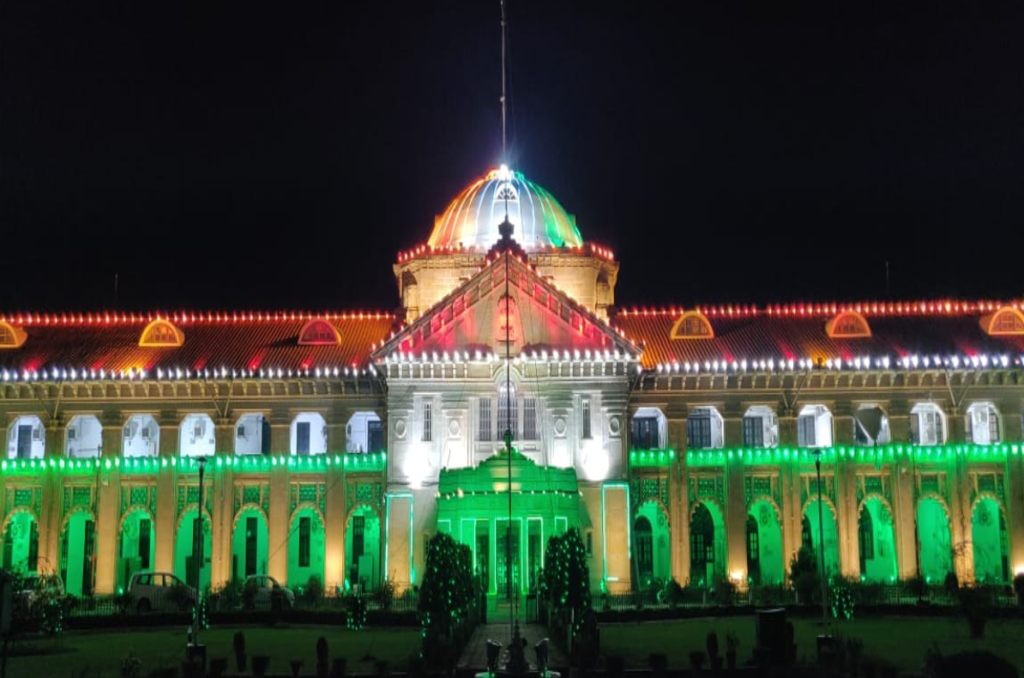
Now in perhaps a first, the Allahabad High Court has said that in a country like India where people of all faiths cohabit, “it is wrong for any religion to claim that it is the only true religion as it implies a disparagement of other faiths.”
The Single Bench of Justice Saurabh Srivastava said this in its March 18, 2026, order while dismissing an application by a Christian priest Vineet Vincent Pereira alias Vineet Vinicent Paresh, accused of hurting religious sentiments by proclaiming in prayer meets that “there is only one religion which is Christian.”
Pereira was booked under Section 295A of the Indian Penal Code, and a chargesheet filed against him on February 19, 2024. A Judicial Magistrate Court took cognisance of the chargesheet on May 18, 2024.
Section 295A IPC deal with “deliberate and malicious acts, intended to outrage religious feelings of any class by insulting its religion or religious beliefs”.
The provision says that “whoever, with deliberate and malicious intention of outraging the religious feelings of any class of [citizens of India], [by words, either spoken or written, or by signs or by visible representations or otherwise], insults or attempts to insult the religion or the religious beliefs of that class, shall be punished with imprisonment of either description for a term which may extend to [three years], or with fine, or with both.”
Dismissing his application, the court said “by bare perusal of the narrations made in the FIR wherein it has been mentioned that in his prayer meet, applicant frequently states that there is only one religion which is Christian and also hurts the sentiments of a particular religion i.e. Hindu, whereas India is a land where people of all faiths and beliefs in secular state as defined by Constitution of India, live together, therefore, it is wrong for any religion to claim that it is the only true religion as it implies a disparagement of other faiths. The opening line of the said provision itself speaks about deliberate and malicious intention of outraging the religious feelings of any class of citizen by insulting its religion or religious faith, meaning thereby, the act of the applicant comes under the ambit of Section 295-A IPC and as such, at this stage, it cannot be said that prima facie, no case is made.”
Pereira’s counsel contended that the priest was falsely implicated in the case only to harass him and that he had not illegally converted the religion of ay marginalised section of the society or spoken against other religions.
On the allegation that he criticized other religions, his counsel said that by perusal of the narration of the FIR, no case is made out against Pereira under Section 295-A IPC.
The counsel contended that the concerned Investigating Officer submitted chargesheet without conducting a fair investigation, and the Judicial Magistrate took cognisance without applying its judicial mind, “which is abuse of process of law”.
Countering this, the state said that the questions raised by the accused relates to disputed questions of fact, and would involve appreciation of evidence. It added that at the time of taking cognizance, only a prima facie case is to be seen and the court concerned is not expected to hold a mini trial.
Dismissing Pereira’s application, the High Court said that “at the stage of taking cognizance, a court’s primary focus is to determine if a prima facie case exists, meaning whether there is sufficient evidence to suggest that an offense has been committed, and not to delve into the merits of the case or the evidence.”