
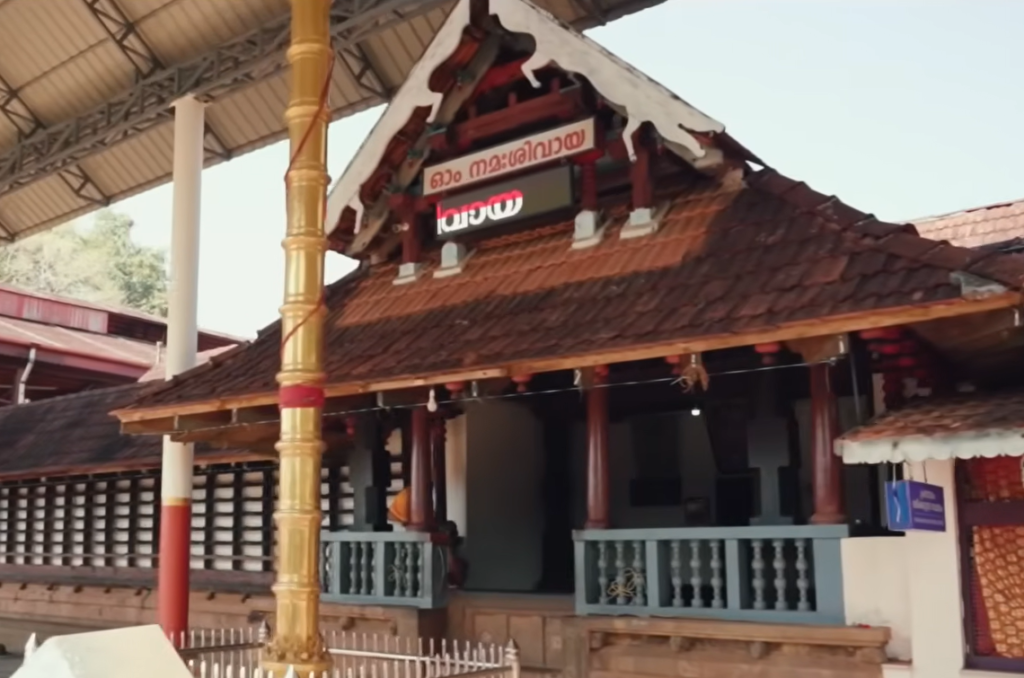
The Kerala High Court has quashed the Malabar Devaswom Board’s decision appointing an Executive Officer in the Thirumandhamkunnu Temple located in Malappuram district and held that it is the hereditary trustees, the Valluvanadu Swaroopam, which is empowered to administer the affairs of the shrine.
A bench of Justices Raja Vijayaraghavan V. and K.V. Jayakumar asked the Board and to initiate steps to appoint hereditary trustee as per a May 4, 1966, scheme governing the temple.
As per the scheme, the administration shall vest in the family of the hereditary trustee, who is the senior most male member of the ‘Swaroopam’ comprising of four families, namely; the Aiyranazhi Kovilakam, the Mankada Kovilakam, the Kadanamanna Kovilakam and the Aripra Kovilakam.
The High Court said that on going through scheme, “it is clear that the power to appoint an Executive Officer primarily vests with the trustee and only when the trustee fails to act in accordance with the scheme, the Board can appoint an Executive Officer for the administration of the affairs of the temple. In other words, the powers of the Board to appoint an Executive Officer as per the scheme is limited.”
The Board had taken the stand that it had appointed an Executive Officer only as a stop-gap arrangement as after the passing away of the hereditary trustee A.C. Bhanunni Raja in May 2013, his successor A.C. Kunhunni Raja who is residing in Bengaluru had appointed his power of attorney holder Venugopal Raja, to carry out the administration of the temple. The Devaswom Commissioner was of the view that the duties of the trustee cannot be entrusted to another person by way of a power-of-attorney.
The High Court however said that “in the present case, the Executive Officer appointed by the Board in 2013, and thereafter his successors, have continued to administer the affairs of the temple for an inordinately long period of nearly thirteen years. Such prolonged continuation of an Executive Officer effectively eclipses the rights of the hereditary trustee to administer the affairs of the temple in accordance with the provisions of the Scheme and the governing statute.”
The ruling pointed out that “the power to appoint an Executive Officer is intended to meet exceptional situations and cannot be exercised in a manner that results in a permanent or indefinite displacement of the hereditary trustee. If the Board is of the view that prevailing circumstances warrant the appointment of an Executive Officer, such appointment must necessarily be for a definite and specified period. This would ensure continuity in administration while safeguarding the rights conferred upon the hereditary trustee under the Scheme and the statute.”
The court said that the Board is, “therefore, duty-bound to periodically review the circumstances that necessitated the appointment of the Executive Officer. Only upon a conscious evaluation and a finding that the circumstances giving rise to the administrative impasse continue to subsist can the term of the Executive Officer be extended, and even then, only for a further specified period. Indefinite extensions, without periodic review and application of mind, would be inconsistent with the statutory framework and the scheme governing the administration of the temple.”
It said that as regards the Thirumandhamkunnu temple, “the Executive Officer is appointed…for an indefinite and unspecified period, that too without giving notice and affording an opportunity to the hereditary trustee of the temple, who is legally entitled to manage the affairs of the temple.”
The court also noted that “many of the provisions of the (1966) scheme are obsolete, old and ineffective for the smooth conduct of the administration of the temple” and asked the Devaswom Board Commissioner to “take effective measures to frame a new scheme to ensure smooth and effective administration of the temple by participation of all the major members of the families giving due respect to the elder members of the families of the hereditary trustees.”
It ordered that “the new scheme shall be framed after effective consultations and meetings with the trustee and the members of the families of the hereditary trustee. The new scheme shall contain provisions and stipulations for the smooth, effective and proper administration of the temple in a transparent and corruption-free manner.”
The bench gave the Board 3 months’ time frame the new scheme which it said “shall be more transparent, fair, equitable and should be capable of safeguarding and protecting the interest of the deity and devotees”.
The High Court also asked the Commissioner to produce a draft of the new scheme before its Devaswom Bench for approval. “The new scheme shall be implemented only after getting approval from this Court,” the bench said.